Subscribe To Our Newsletter And Get A Weekly Exclusive Offer Just For you!


Blog
Welcome to Colorado Homes with Nora, where local expertise meets proven results. Nora is a trusted Colorado Springs real estate professional dedicated to helping homeowners sell efficiently and for top dollar. With a deep understanding of the local market, strategic pricing, and high-impact marketing, Nora ensures your home stands out and attracts the right buyers—so you can sell with confidence and clarity.
Colorado Springs Real Estate Blog | Colorado Homes with Nora
Welcome to the blog of Colorado Homes with Nora, your trusted source for real estate insights in Colorado Springs and surrounding communities. Here, you’ll find timely market updates, expert tips, and practical guidance for buying or selling a home in today’s evolving market.
Whether you’re a first-time homebuyer, a seasoned homeowner, or planning your next move, this blog is designed to help you make confident, informed real estate decisions. Check back often for local trends, community highlights, and expert advice from a Colorado Springs real estate professional who knows the market inside and out.
Why Choose a Colorado Springs Real Estate Agent Like
Nora Pajian?
Buying or selling a home is one of the biggest financial decisions you’ll make—and having the right agent matters. Working with an experienced local real estate professional gives you access to market data, skilled negotiation, and guidance through every step of the process.
As a Colorado Springs real estate expert, Nora Pajian is deeply knowledgeable about local neighborhoods, pricing strategies, and buyer behavior. She takes the time to understand your goals, prioritize your needs, and create a strategy tailored specifically to you. The result is a smoother transaction, stronger results, and a client experience built on trust, transparency, and long-term relationships.
What Real Estate Agents Do
From pricing and marketing to negotiations and closing, real estate agents play a critical role in ensuring a successful transaction. Learn how working with a professional can save you time, stress, and money.
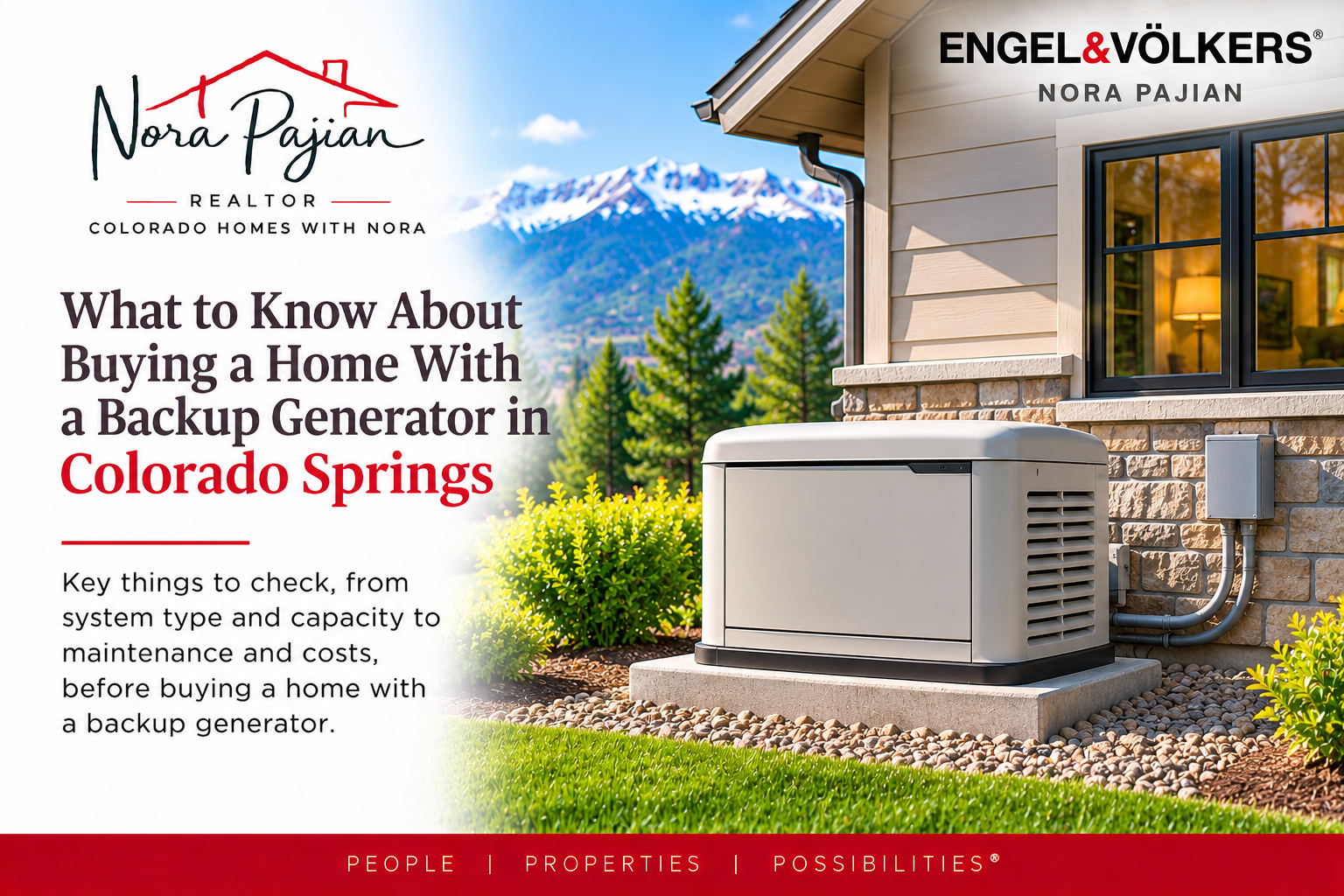
What to Know About Buying a Home With a Backup Generator in Colorado Springs
A backup generator can provide added convenience and peace of mind when a home experiences a power outage. For buyers in Colorado Springs, it may be a useful feature to consider, especially when evaluating properties with essential electrical systems that need reliable backup power.
However, not all generators operate the same way. Before purchasing a home with one, it's important to understand its capacity, fuel source, maintenance history, and installation requirements.
1. Understand the Type of Backup Generator
Residential backup generators generally fall into two categories:
Standby generators: Permanently installed outside the home and typically connected to the electrical system through an automatic transfer switch.
Portable generators: Movable units that can provide temporary power to selected appliances or equipment.
A standby generator may automatically activate when utility power is interrupted, while portable units generally require manual setup.
Ask the seller which type is installed and whether the generator is included in the sale.
2. Check the Generator's Power Capacity
A generator's capacity determines how much electricity it can supply during an outage.
Some systems are designed to power only essential items, such as refrigerators, lights, and heating equipment. Others may support larger portions of the home.
Ask which circuits or appliances the generator can operate simultaneously. If you plan to run major appliances, heating systems, or other high-demand equipment, confirm that the generator has sufficient capacity.
3. Review the Fuel Source and Availability
Backup generators can operate using different fuel sources, including:
Natural gas: Often connected to an existing gas supply.
Propane: Requires an appropriately sized storage tank and regular fuel monitoring.
Gasoline or diesel: Commonly used by portable generators and some larger systems.
Consider the fuel source, storage requirements, operating costs, and availability. For properties using propane, ask about tank ownership, capacity, and refill arrangements.
4. Review Installation and Safety Requirements
A permanently installed generator should have appropriate electrical connections, ventilation, and clearance from the home and nearby structures.
Ask whether the installation was completed by qualified professionals and whether permits or inspection records are available.
A properly installed transfer switch is also important because it helps prevent electricity from flowing back into utility lines during an outage.
Never operate a portable generator indoors, inside a garage, or near open windows because of the risk of carbon monoxide poisoning.
5. Check Maintenance Records and Operating Condition
Like other mechanical equipment, generators require regular maintenance.
Before closing, ask the seller about:
The generator's installation date.
Previous repairs or service appointments.
Manufacturer warranty information.
Battery condition and replacement history.
Recent testing or maintenance records.
Consider having a qualified generator technician inspect the equipment and demonstrate how it operates.
6. Understand Ongoing Ownership Costs
Owning a backup generator involves more than the initial installation.
Depending on the model, you may need to budget for fuel, routine servicing, replacement batteries, filters, and occasional repairs.
Also, check whether the generator has an automatic exercise cycle and whether it operates according to the manufacturer's maintenance recommendations.
Understanding these expenses can help you evaluate the feature as part of your overall homeownership budget.
Common Mistakes Buyers Should Avoid
When purchasing a home with a backup generator, avoid:
Assuming the generator can power the entire home.
Overlooking its age and maintenance history.
Failing to confirm the fuel source and availability.
Ignoring installation permits and electrical connections.
Skipping a professional inspection.
Forgetting to confirm that the generator is included in the sale.
Taking time to evaluate these details can help you understand the generator's condition and capabilities before closing.
Frequently Asked Questions
1. Does a backup generator automatically turn on during a power outage?
Some permanently installed standby generators do when connected to an automatic transfer switch. Portable generators generally require manual operation.
2. Can a backup generator power an entire house?
It depends on the generator's capacity and the home's electrical demands. Some systems support only essential circuits, while larger units may power most of the property.
3. How often should a backup generator be maintained?
Maintenance schedules vary by manufacturer and model. Follow the manufacturer's recommendations and have the equipment serviced by a qualified technician.
4. Should I have the generator inspected before buying the home?
Yes. A professional evaluation can help verify its condition, installation, capacity, and operational performance.
Key Takeaways
A backup generator can be a useful feature when buying a home in Colorado Springs, but buyers should understand exactly what it can power and what it takes to maintain it.
Review its fuel source, capacity, installation records, and service history. A professional inspection can help identify potential issues before closing.
Looking for a Home in Colorado Springs?
When comparing properties, it's important to understand both the features and equipment included with the home. Nora Pajian of Engel & Völkers Pikes Peak Realty can help you navigate the buying process and identify important questions to ask before making a purchase.
Connect with Nora to discuss your Colorado Springs home search.


Subscribe To Our Newsletter And Get A Weekly Offer Exclusive Just For you!
These offers are so exclusive just for those who are into Real Estate and we
want to give it to you for free!

© 2026 NoraPajian.com. All Rights Reserved.
Pages:
Meet The Team
Blog
Featured Listings
Sell Your Home
Buy A House
Search Homes
Follow Us On:






© 2025 NoraPajian.com. All Rights Reserved.
Pages:
Meet The Team
Blog
Featured Listings
Sell Your Home
Buy A House
Search Homes
Follow Us On: